

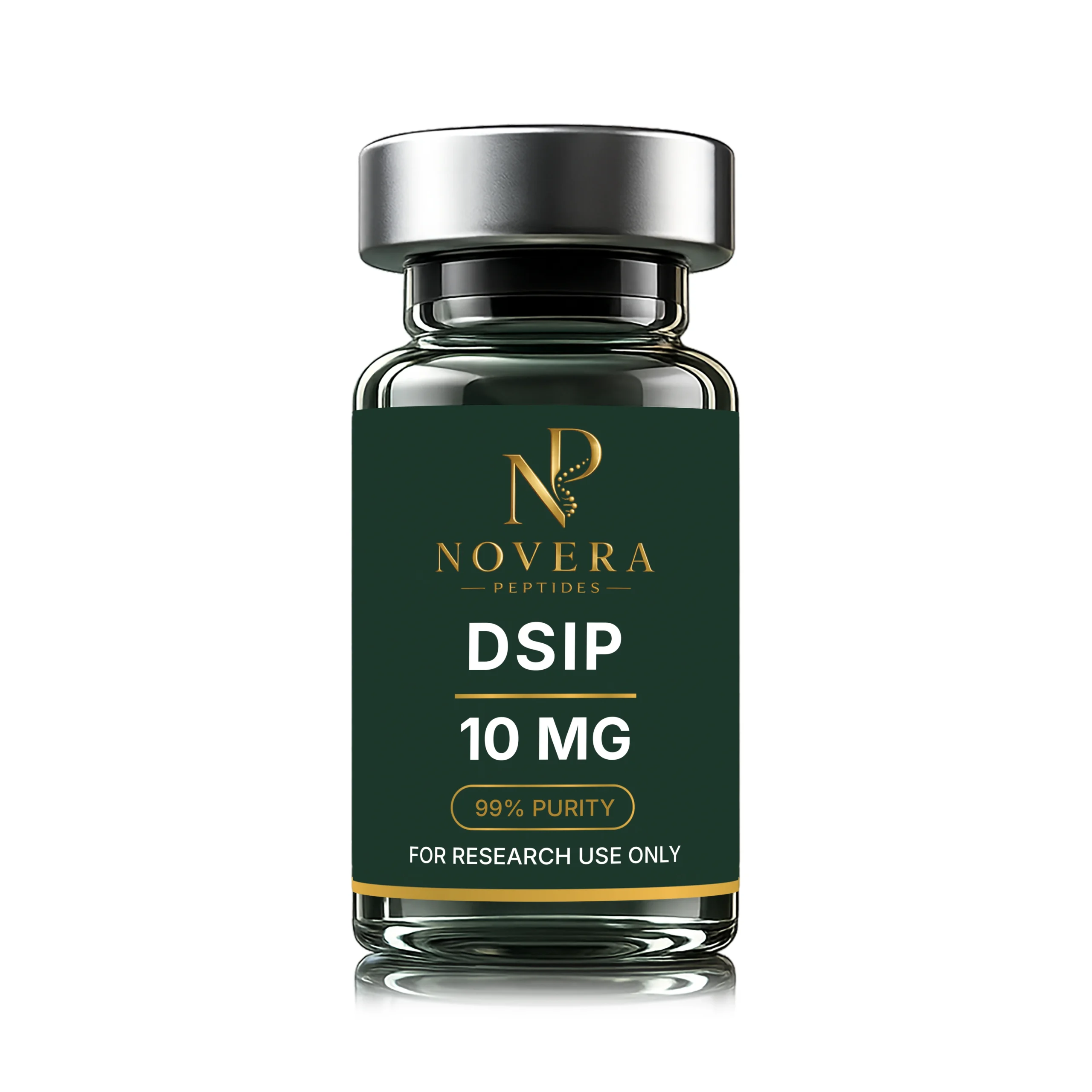

DSIP 10 mg
Research Highlights
- Sleep regulation research
- Neurobiological signaling pathways
- Circadian rhythm investigation
- Stress-response pathway research
- Cellular communication studies
- Experimental neuroscience applications
DSIP, commonly referenced in scientific literature as Delta Sleep-Inducing Peptide, is an investigational research amino studied for its relationship with neurobiological signaling, sleep-related pathways, and regulatory communication within controlled laboratory models.
Researchers continue to investigate DSIP because of its potential relevance in neuroscience, circadian biology, stress-response signaling, and cellular communication systems. Its role in laboratory-based neurological research has made it a compound of interest for scientists studying how biological signaling networks influence rest, regulation, and adaptive physiological processes.
Introduction
Sleep and neurological regulation remain major areas of scientific investigation. Researchers continue to study the biological systems that influence sleep cycles, circadian rhythm, stress response, and communication between the nervous system and other physiological pathways.
DSIP has attracted interest because it has been evaluated in experimental models involving neurochemical signaling and regulatory biology. While its exact mechanisms continue to be studied, scientific literature has explored its connection to sleep-associated pathways and broader neurological communication systems.
Neurobiological Signaling Research
DSIP has been investigated for its interaction with neurological signaling pathways involved in communication between cells and regulatory systems. Laboratory studies continue to examine how DSIP-related activity may influence molecular signaling, neurochemical balance, and adaptive biological responses under controlled research conditions.
This area of study remains important for researchers seeking to better understand how signaling compounds interact with the nervous system and contribute to broader physiological regulation.
Sleep Regulation Research
One of the most recognized areas of DSIP research involves sleep-related biological pathways. Scientific investigations have explored its relationship with sleep onset, sleep architecture, and regulatory systems associated with rest and recovery cycles.
Researchers continue to study DSIP within controlled experimental models to better understand how sleep-related signaling may interact with neurological activity, circadian rhythm, and biological adaptation.
Circadian Rhythm and Stress-Response Research
Beyond sleep regulation, DSIP has also been studied in relation to circadian biology and stress-response pathways. Research has examined how neurological signaling systems respond to environmental, physiological, and metabolic stressors.
These investigations may help scientists better understand how internal biological timing systems communicate with stress-related signaling networks and adaptive response mechanisms.
Molecular Communication Research
DSIP remains a subject of interest in studies focused on molecular communication and intracellular signaling. Researchers continue to evaluate how DSIP-related pathways may interact with cellular response systems, biological regulation, and neurological communication networks.
Its use in experimental neuroscience has contributed to ongoing interest in how small signaling compounds influence complex biological systems within laboratory environments.
Current Areas of Scientific Interest
- Sleep onset and sleep regulation research
- Neurobiological signaling pathways
- Circadian rhythm investigation
- Stress-response biology
- Cellular communication systems
- Molecular signaling research
- Neurochemical regulation
- Laboratory neuroscience models
- Adaptive physiological response mechanisms
- Analytical and controlled research applications
Research Considerations
Scientific findings involving DSIP should always be interpreted within the context of study design, experimental methodology, and research limitations. While DSIP remains an active subject of laboratory investigation, additional research is necessary to further clarify its biological characteristics and potential mechanisms across different experimental models.
As with all investigational research materials, conclusions should be based on peer-reviewed evidence, controlled laboratory conditions, and appropriate scientific interpretation.
Laboratory Research Notice
This product is supplied exclusively for laboratory research, analytical testing, and scientific investigation. It is intended only for qualified research professionals operating within appropriate laboratory environments.
This product is not intended for human consumption, veterinary use, diagnosis, treatment, prevention, or cure of any disease.
For laboratory research use only. Not for human or animal consumption.

Reviews
There are no reviews yet.