
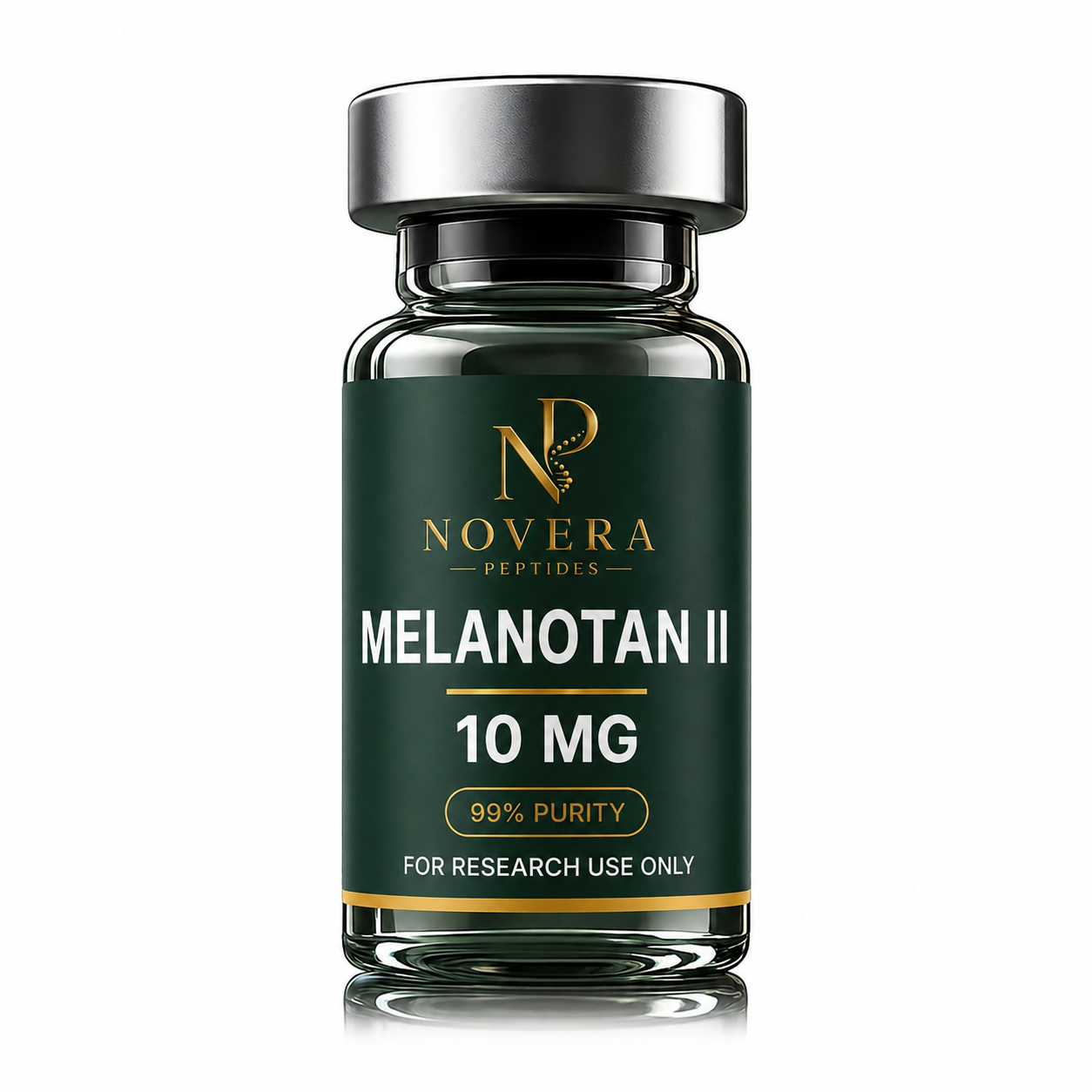

Melanotan II 10 mg
Research Highlights
- Melanocortin receptor research
- Pigmentation biology studies
- Cellular communication pathways
- Molecular signaling investigations
- Receptor-mediated biological activity
- Laboratory physiology models
Introduction
Melanocortin receptor systems are involved in several biological communication pathways studied across pigmentation biology, cellular signaling, and molecular response research. Melanotan II has become a subject of scientific interest because of its relationship with melanocortin receptor activity and receptor-mediated signaling networks.
Current research continues to evaluate how melanocortin-related pathways contribute to cellular communication, biological regulation, and adaptive physiological responses within controlled laboratory environments.
Research Overview
Melanotan II has been evaluated in laboratory studies involving melanocortin receptor signaling, intracellular communication, pigmentation-related biology, and biological response mechanisms. Researchers continue investigating its interaction with receptor pathways and downstream signaling systems under controlled experimental conditions.
These investigations continue expanding scientific understanding of melanocortin biology and molecular communication.
Melanocortin Receptor Research
Scientific studies have explored Melanotan II for its interaction with melanocortin receptor pathways involved in cellular signaling and biological communication. Researchers continue examining receptor activity, intracellular signaling, and related molecular response mechanisms across laboratory models.
This remains one of the primary areas of scientific interest surrounding Melanotan II.
Pigmentation Biology Research
Melanotan II has also been investigated in research models involving pigmentation biology and melanocyte-related signaling pathways. Laboratory studies continue evaluating how melanocortin receptor activity may influence molecular communication systems associated with pigment regulation.
These investigations contribute to a broader understanding of pigmentation-related cellular biology.
Cellular Signaling Research
Beyond pigmentation biology, Melanotan II remains a subject of interest in studies involving intracellular communication, adaptive biological responses, receptor-mediated signaling, and molecular regulation.
Ongoing research continues to examine how these signaling networks function within controlled experimental systems.
Current Areas of Scientific Interest
- Melanocortin receptor pathways
- Pigmentation biology research
- Melanocyte signaling studies
- Cellular communication systems
- Intracellular signaling
- Receptor-mediated activity
- Molecular response mechanisms
- Adaptive biological responses
- Laboratory physiology
- Experimental biological models
Research Considerations
Scientific findings involving Melanotan II should always be interpreted within the context of experimental methodology, study design, laboratory conditions, and model limitations. Ongoing research continues to expand scientific understanding of melanocortin receptor biology and related signaling pathways.
As with all investigational research materials, conclusions should be based upon peer-reviewed evidence generated under controlled laboratory conditions.
Laboratory Research Notice
This product is supplied exclusively for laboratory research, analytical testing, and scientific investigation. It is intended only for qualified research professionals operating within appropriate laboratory environments.
This product is not intended for human consumption, veterinary use, diagnosis, treatment, prevention, or cure of any disease.
For laboratory research use only. Not for human or animal consumption.

Reviews
There are no reviews yet.