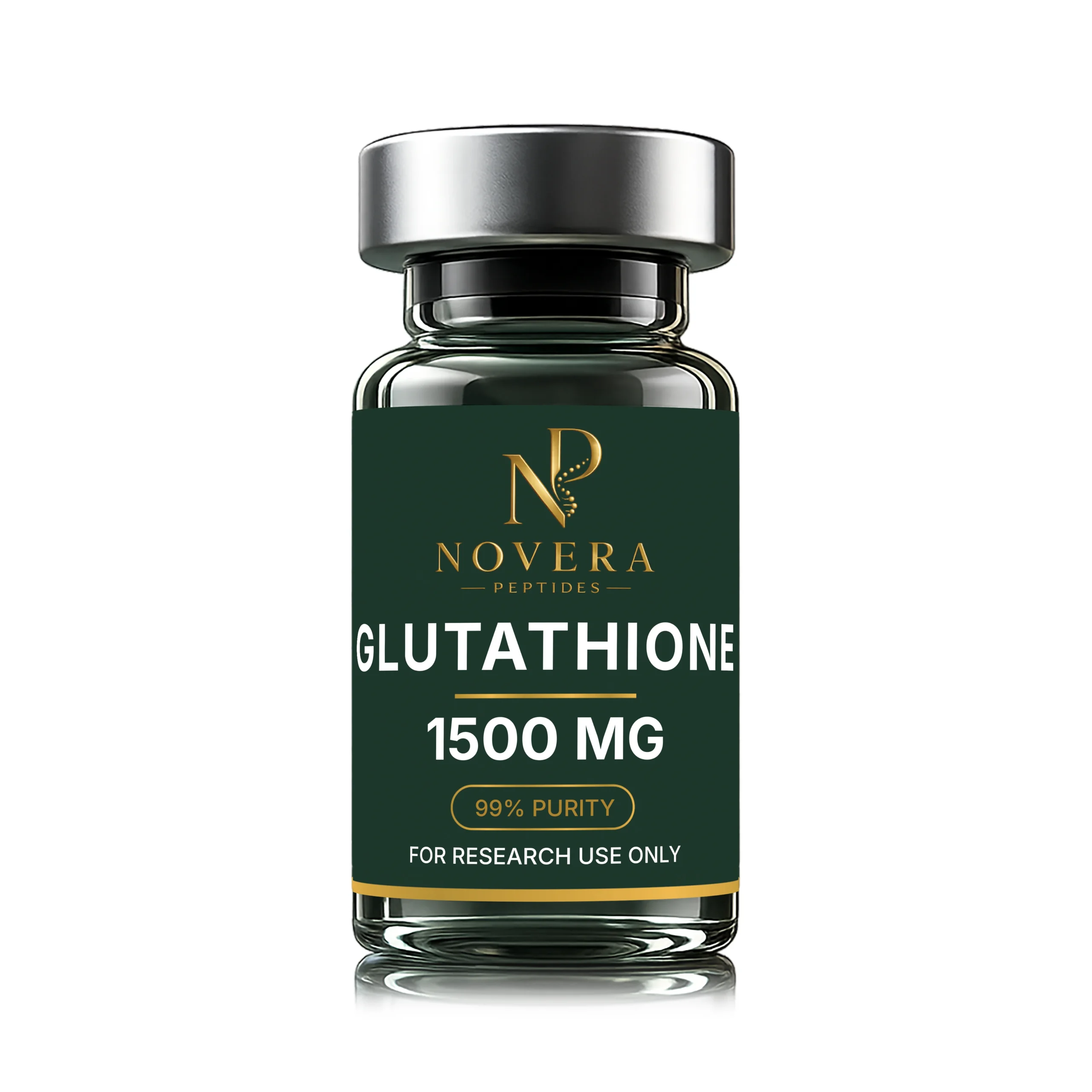

Glutathione 1500 mg
Research Highlights
- Antioxidant defense system research
- Oxidative stress biology
- Cellular detoxification pathways
- Mitochondrial function investigations
- Metabolic homeostasis research
- Cellular communication and redox signaling
Introduction
Cellular function depends upon carefully regulated antioxidant defense systems that protect biological structures from oxidative stress while maintaining normal metabolic activity. Glutathione has become one of the most extensively researched endogenous molecules because of its central role in maintaining cellular homeostasis.
Current scientific literature continues investigating Glutathione across laboratory models involving oxidative balance, cellular metabolism, mitochondrial activity, detoxification processes, and adaptive physiological responses.
Research Overview
Glutathione has been widely evaluated in laboratory research examining antioxidant biology, cellular communication, metabolic regulation, oxidative stress responses, and intracellular defense mechanisms. Researchers continue exploring how glutathione-dependent pathways contribute to normal cellular physiology.
These investigations continue expanding scientific understanding of redox biology and cellular maintenance mechanisms.
Antioxidant Research
Glutathione is recognized as one of the body’s primary endogenous antioxidant molecules. Laboratory investigations continue evaluating its interaction with reactive oxygen species, oxidative stress pathways, and cellular protection mechanisms under controlled experimental conditions.
This remains one of the most active areas of glutathione research.
Metabolic & Cellular Research
Researchers continue studying Glutathione in laboratory models involving metabolic regulation, intracellular signaling, enzyme activity, mitochondrial physiology, and adaptive biological responses. Experimental investigations seek to better understand how antioxidant systems support normal cellular function.
Current evidence continues expanding scientific knowledge regarding cellular homeostasis and metabolic regulation.
Mitochondrial & Detoxification Research
Scientific investigations have explored Glutathione’s role within laboratory models involving mitochondrial function, detoxification pathways, protein regulation, and cellular defense systems. Researchers continue evaluating these biological mechanisms across multiple experimental environments.
These findings continue supporting broader research into cellular maintenance and physiological resilience.
Current Areas of Scientific Interest
- Antioxidant defense pathways
- Oxidative stress regulation
- Redox signaling biology
- Mitochondrial physiology
- Cellular detoxification research
- Metabolic homeostasis
- Intracellular communication
- Protein regulation
- Cellular maintenance mechanisms
- Laboratory oxidative biology
Research Considerations
Scientific findings involving Glutathione should always be interpreted within the context of study design, experimental methodology, laboratory conditions, and model limitations. Ongoing research continues expanding scientific understanding of glutathione biology across diverse experimental systems.
As with all investigational research materials, conclusions should be based upon peer-reviewed scientific evidence generated under controlled laboratory conditions.
Laboratory Research Notice
This product is supplied exclusively for laboratory research, analytical testing, and scientific investigation. It is intended only for qualified research professionals operating within appropriate laboratory environments.
This product is not intended for human consumption, veterinary use, diagnosis, treatment, prevention, or cure of any disease.
For laboratory research use only. Not for human or animal consumption.
Sources & References
Glutathione Deficiency and Oxidative Stress in Human Disease
2000
Wu G, Fang YZ, Yang S, et al.
Glutathione Metabolism and Its Implications for Health
2004
Townsend DM, Tew KD, Tapiero H
The Antioxidant Role of Glutathione and Its Clinical Applications
2003
Pompella A, Visvikis A, Paolicchi A, et al.
Glutathione: Biosynthesis, Regulation, and Biological Functions
2009
Lu SC
Glutathione and Human Disease: A Comprehensive Review
2013
Ballatori N, Krance SM, Notenboom S, et al.
Glutathione Metabolism and Its Implications for Health
2014
Forman HJ, Zhang H, Rinna A
Glutathione and Redox Signaling in Human Health and Disease
2013
Lushchak VI
Role of Glutathione in Protection Against Oxidative Stress
2012
Jones DP, Sies H
Dietary and Supplemental Glutathione in Human Health
2018
Richie JP Jr, Nichenametla S

Reviews
There are no reviews yet.