

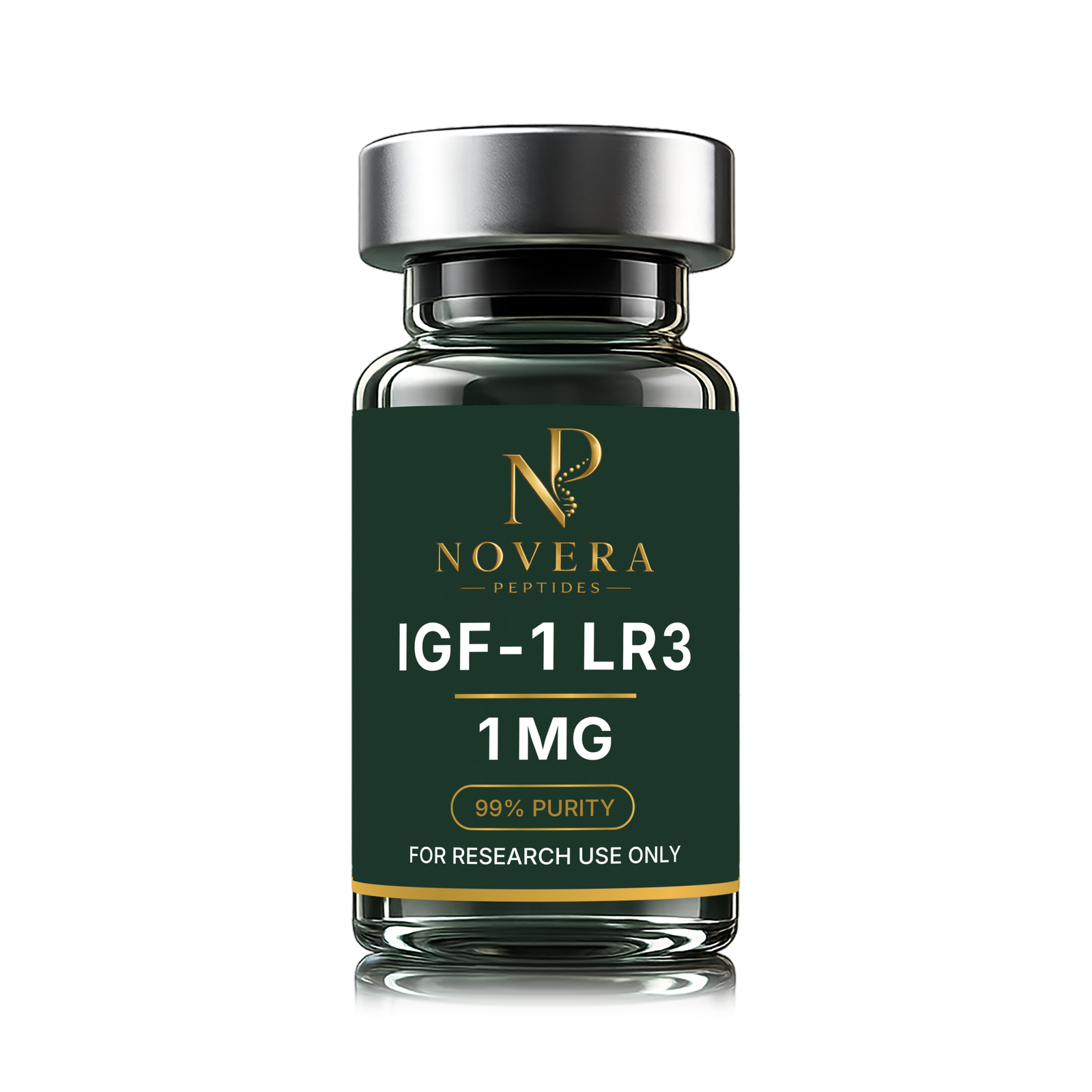

IGF-1 LR3 1 mg
Research Highlights
- Growth factor signaling research
- Cellular communication pathways
- Protein synthesis investigations
- Tissue physiology studies
- Metabolic signaling research
- Molecular biology applications
Introduction
Growth factors coordinate numerous biological processes by regulating communication between cells. IGF-1 LR3 has become an important research compound because its extended activity allows investigators to examine prolonged growth factor signaling under controlled laboratory conditions.
Current scientific literature continues exploring how IGF-1 LR3 influences cellular adaptation, intracellular communication, tissue physiology, and molecular signaling across diverse experimental models.
Research Overview
IGF-1 LR3 has been extensively investigated in laboratory studies examining insulin-like growth factor signaling, protein synthesis pathways, cellular metabolism, and adaptive physiological responses. Researchers continue evaluating its biological activity within controlled research environments.
These investigations continue expanding scientific understanding of growth factor biology and cellular regulation.
Growth Factor Research
Experimental studies continue evaluating how IGF-1 LR3 interacts with insulin-like growth factor receptors and downstream signaling pathways involved in cellular communication, protein synthesis, and tissue biology. Ongoing research seeks to better understand prolonged receptor activation and intracellular signaling mechanisms.
This remains one of the primary areas of scientific investigation involving IGF-1 LR3.
Cellular & Tissue Research
Researchers continue studying IGF-1 LR3 in laboratory models involving tissue physiology, cellular adaptation, extracellular communication, and regenerative biology. These investigations examine how growth factor signaling contributes to normal biological regulation under experimental conditions.
Current evidence continues improving scientific understanding of complex cellular communication networks.
Metabolic Research
Laboratory investigations have explored IGF-1 LR3 within studies involving nutrient signaling, cellular metabolism, molecular regulation, and adaptive biological responses. Researchers continue evaluating these pathways across multiple experimental systems.
These findings continue supporting broader research into growth factor physiology and molecular biology.
Current Areas of Scientific Interest
- Growth factor signaling pathways
- Cellular communication
- Protein synthesis biology
- Tissue physiology research
- Metabolic signaling
- Molecular biology
- Intracellular communication
- Nutrient signaling pathways
- Experimental endocrinology
- Laboratory physiology
Research Considerations
Scientific findings involving IGF-1 LR3 should always be interpreted within the context of study design, experimental methodology, laboratory conditions, and model limitations. Ongoing investigations continue expanding scientific knowledge regarding long-acting growth factor biology.
As with all investigational research materials, conclusions should be based upon peer-reviewed scientific evidence generated under controlled laboratory conditions.
Laboratory Research Notice
This product is supplied exclusively for laboratory research, analytical testing, and scientific investigation. It is intended only for qualified research professionals operating within appropriate laboratory environments.
This product is not intended for human consumption, veterinary use, diagnosis, treatment, prevention, or cure of any disease.
For laboratory research use only. Not for human or animal consumption.

Reviews
There are no reviews yet.