

WOLVERINE

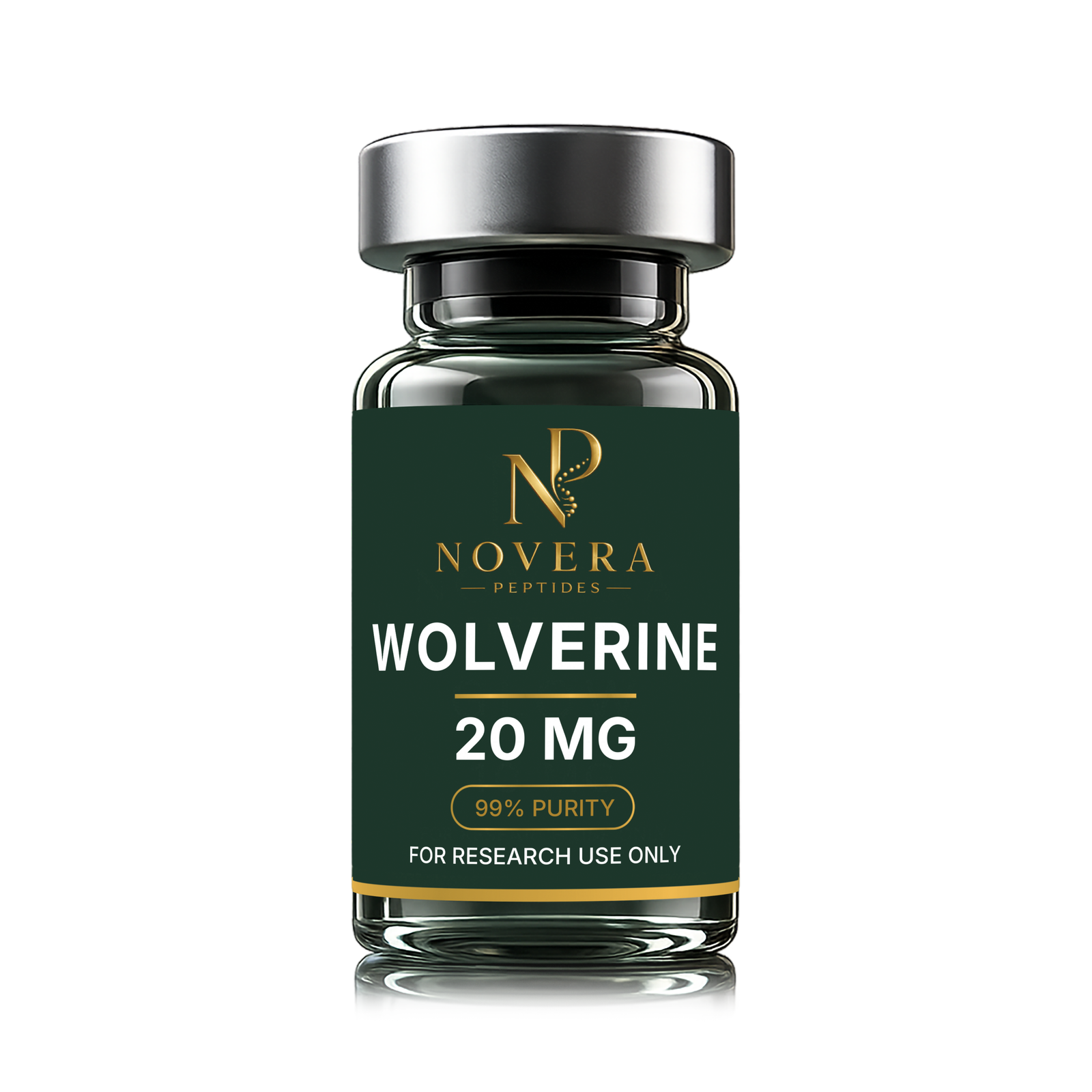
Wolverine Blend combines BPC-157 + TB-500 into a single laboratory research compound. This dual-compound formulation is widely studied for tissue repair, wound healing, angiogenesis, collagen formation, and recovery research. Each batch is third-party HPLC tested and includes a Certificate of Analysis (COA) for laboratory verification. For research use only.

$150.00

SHOW COA
SHOW COA

vERFIED
PURITY

Secure
Payment

Third-party
Tested

Research Use Disclaimer

Research Use Only: All products offered are intended strictly for laboratory research purposes. Products are not for human consumption and are not intended for diagnostic, therapeutic, or medical use. By purchasing from our website, customers confirm they are qualified researchers or laboratories and understand the intended research-use designation.

Wolverine Blend 20 mg

BPC-157 10mg + TB-500 10mg

Wolverine Blend is a dual-compound research formulation containing BPC-157 (10 mg) + TB-500 (10 mg). This investigational research blend is extensively studied for tissue repair, cellular communication, angiogenesis, extracellular matrix biology, and regenerative processes under controlled laboratory conditions. Every vial is third-party HPLC tested and supported by a Certificate of Analysis (COA) from Novera Research.

Research Highlights

  • Tissue repair and regeneration research
  • Cellular communication pathways
  • Angiogenesis and vascular biology studies
  • Collagen and extracellular matrix research
  • Musculoskeletal tissue investigations
  • Peptide synergy research models

Introduction

Wolverine combines BPC-157 + TB-500, two extensively studied research peptides that have independently demonstrated broad scientific interest across regenerative biology, cellular signaling, and tissue-related research. The formulation was developed to allow researchers to investigate how these complementary peptides may interact within controlled laboratory environments.

Current experimental research continues exploring the biological pathways associated with tissue maintenance, extracellular matrix regulation, angiogenesis, cellular migration, and adaptive repair mechanisms using combination peptide models.

Research Overview

Laboratory investigations have evaluated Wolverine in experimental models examining peptide-mediated cellular communication, tissue remodeling pathways, connective tissue biology, and regenerative signaling networks. Research focuses on understanding how BPC-157 + TB-500 may influence complementary biological systems when evaluated together.

These investigations continue expanding scientific understanding of peptide interactions involved in regenerative biology and molecular signaling.

BPC-157 Research

BPC-157 has been extensively investigated for its interaction with tissue-related signaling pathways, angiogenesis, nitric oxide regulation, collagen biology, and cellular communication systems. Experimental studies continue evaluating its involvement in connective tissue research, tendon biology, ligament models, gastrointestinal tissue investigations, and adaptive biological responses.

Its broad research profile continues making BPC-157 one of the most studied investigational peptides in regenerative biology.

TB-500 Research

TB-500 has been investigated in laboratory models involving cellular migration, actin regulation, extracellular matrix biology, tissue remodeling pathways, and peptide-mediated communication systems. Researchers continue evaluating its interaction with musculoskeletal tissues, connective tissue biology, and structural cellular adaptation.

These investigations contribute to ongoing research into regenerative signaling and cellular organization.

Combination Peptide Research

The Wolverine formulation allows researchers to investigate how BPC-157 + TB-500 may function together across multiple biological pathways. Current laboratory studies continue examining complementary interactions involving cellular migration, angiogenesis, collagen biology, tissue remodeling, inflammatory signaling pathways, and regenerative communication systems.

Combination peptide research remains an active area of scientific investigation as researchers continue evaluating synergistic biological mechanisms under controlled laboratory conditions.

Current Areas of Scientific Interest

  • Tissue regeneration research
  • Cellular migration pathways
  • Angiogenesis and vascular biology
  • Collagen synthesis research
  • Extracellular matrix biology
  • Connective tissue investigations
  • Inflammatory signaling research
  • Musculoskeletal biology studies
  • Cellular communication systems
  • Combination peptide research models

Research Considerations

Scientific findings involving Wolverine should always be interpreted within the context of experimental methodology, laboratory conditions, study design, and model limitations. Ongoing research continues expanding scientific understanding of combination peptide biology and regenerative signaling pathways.

As with all investigational research materials, conclusions should be based upon peer-reviewed evidence generated under controlled laboratory conditions.

Laboratory Research Notice

This product is supplied exclusively for laboratory research, analytical testing, and scientific investigation. It is intended only for qualified research professionals operating within appropriate laboratory environments.

This product is not intended for human consumption, veterinary use, diagnosis, treatment, prevention, or cure of any disease.

For laboratory research use only. Not for human or animal consumption.

Lorem ipsum dolor sit amet, consectetur adipiscing elit. Ut elit tellus, luctus nec ullamcorper mattis, pulvinar dapibus leo.

Lab Report
Date Added :
07/10/2026

Wolverine Blend 20 mg

BPC-157 10mg + TB-500 10mg

Wolverine Blend is a dual-compound research formulation containing BPC-157 (10 mg) + TB-500 (10 mg). This investigational research blend is extensively studied for tissue repair, cellular communication, angiogenesis, extracellular matrix biology, and regenerative processes under controlled laboratory conditions. Every vial is third-party HPLC tested and supported by a Certificate of Analysis (COA) from Novera Research.

Research Highlights

  • Tissue repair and regeneration research
  • Cellular communication pathways
  • Angiogenesis and vascular biology studies
  • Collagen and extracellular matrix research
  • Musculoskeletal tissue investigations
  • Peptide synergy research models

Introduction

Wolverine combines BPC-157 + TB-500, two extensively studied research peptides that have independently demonstrated broad scientific interest across regenerative biology, cellular signaling, and tissue-related research. The formulation was developed to allow researchers to investigate how these complementary peptides may interact within controlled laboratory environments.

Current experimental research continues exploring the biological pathways associated with tissue maintenance, extracellular matrix regulation, angiogenesis, cellular migration, and adaptive repair mechanisms using combination peptide models.

Research Overview

Laboratory investigations have evaluated Wolverine in experimental models examining peptide-mediated cellular communication, tissue remodeling pathways, connective tissue biology, and regenerative signaling networks. Research focuses on understanding how BPC-157 + TB-500 may influence complementary biological systems when evaluated together.

These investigations continue expanding scientific understanding of peptide interactions involved in regenerative biology and molecular signaling.

BPC-157 Research

BPC-157 has been extensively investigated for its interaction with tissue-related signaling pathways, angiogenesis, nitric oxide regulation, collagen biology, and cellular communication systems. Experimental studies continue evaluating its involvement in connective tissue research, tendon biology, ligament models, gastrointestinal tissue investigations, and adaptive biological responses.

Its broad research profile continues making BPC-157 one of the most studied investigational peptides in regenerative biology.

TB-500 Research

TB-500 has been investigated in laboratory models involving cellular migration, actin regulation, extracellular matrix biology, tissue remodeling pathways, and peptide-mediated communication systems. Researchers continue evaluating its interaction with musculoskeletal tissues, connective tissue biology, and structural cellular adaptation.

These investigations contribute to ongoing research into regenerative signaling and cellular organization.

Combination Peptide Research

The Wolverine formulation allows researchers to investigate how BPC-157 + TB-500 may function together across multiple biological pathways. Current laboratory studies continue examining complementary interactions involving cellular migration, angiogenesis, collagen biology, tissue remodeling, inflammatory signaling pathways, and regenerative communication systems.

Combination peptide research remains an active area of scientific investigation as researchers continue evaluating synergistic biological mechanisms under controlled laboratory conditions.

Current Areas of Scientific Interest

  • Tissue regeneration research
  • Cellular migration pathways
  • Angiogenesis and vascular biology
  • Collagen synthesis research
  • Extracellular matrix biology
  • Connective tissue investigations
  • Inflammatory signaling research
  • Musculoskeletal biology studies
  • Cellular communication systems
  • Combination peptide research models

Research Considerations

Scientific findings involving Wolverine should always be interpreted within the context of experimental methodology, laboratory conditions, study design, and model limitations. Ongoing research continues expanding scientific understanding of combination peptide biology and regenerative signaling pathways.

As with all investigational research materials, conclusions should be based upon peer-reviewed evidence generated under controlled laboratory conditions.

Laboratory Research Notice

This product is supplied exclusively for laboratory research, analytical testing, and scientific investigation. It is intended only for qualified research professionals operating within appropriate laboratory environments.

This product is not intended for human consumption, veterinary use, diagnosis, treatment, prevention, or cure of any disease.

For laboratory research use only. Not for human or animal consumption.

Sources & References

CELL AND TISSUE RESEARCH

Gastric Pentadecapeptide Body Protection Compound BPC 157 and Its Role in Accelerating Musculoskeletal Soft Tissue Healing

2019
Gwyer D, Wragg NM, Wilson SL

View Source ↗

CURRENT PHARMACEUTICAL DESIGN

BPC 157 and Standard Angiogenic Growth Factors: Gastrointestinal Tract Healing, Lessons from Tendon, Ligament, Muscle and Bone Healing

2018
Seiwerth S, et al.

View Source ↗

JOURNAL OF ORTHOPAEDIC RESEARCH

Gastric Pentadecapeptide BPC 157 Accelerates Healing of Transected Rat Achilles Tendon and In Vitro Stimulates Tendocytes Growth

2003
Staresinic M, et al.

View Source ↗

JOURNAL OF ORTHOPAEDIC RESEARCH

Achilles Detachment in Rat and Stable Gastric Pentadecapeptide BPC 157: Promoted Tendon-to-Bone Healing

2006
Krivic A, et al.

View Source ↗

SURGERY TODAY

Gastric Pentadecapeptide BPC 157 as an Effective Therapy for Muscle Crush Injury in the Rat

2008
Novinscak T, et al.

View Source ↗

MEDICAL SCIENCE MONITOR

Impact of Pentadecapeptide BPC 157 on Muscle Healing Impaired by Systemic Corticosteroid Application

2010
Pevec D, et al.

View Source ↗

JOURNAL OF PHYSIOLOGY AND PHARMACOLOGY

Pentadecapeptide BPC 157 Improves Ligament Healing

2010
Cerovecki T, et al.

View Source ↗

JOURNAL OF APPLIED PHYSIOLOGY

The Promoting Effect of Pentadecapeptide BPC 157 on Tendon Healing Involves Tendon Fibroblast Outgrowth

2011
Chang CH, et al.

View Source ↗

INTERNATIONAL JOURNAL OF MOLECULAR SCIENCES

Pentadecapeptide BPC 157 Enhances the Growth Hormone Receptor Expression in Tendon Fibroblasts

2014
Chang CH, et al.

View Source ↗

JOURNAL OF INVESTIGATIVE DERMATOLOGY

Thymosin Beta-4 Accelerates Wound Healing

1999
Malinda KM, et al.

View Source ↗

EXPERIMENTAL EYE RESEARCH

Thymosin Beta-4 Promotes Corneal Wound Healing and Modulates Inflammatory Mediators In Vivo

2001
Sosne G, et al.

View Source ↗

EXPERIMENTAL EYE RESEARCH

Thymosin Beta-4 Promotes Corneal Wound Healing In Vivo

2002
Sosne G, et al.

View Source ↗

CLINICAL OPHTHALMOLOGY

Thymosin Beta-4: A Novel Corneal Wound Healing and Anti-Inflammatory Agent

2007
Sosne G, et al.

View Source ↗

ANNALS OF THE NEW YORK ACADEMY OF SCIENCES

The Regenerative Peptide Thymosin Beta-4 Accelerates Wound Repair

2012
Treadwell T, et al.

View Source ↗

ANNALS OF THE NEW YORK ACADEMY OF SCIENCES

Thymosin Beta-4: A Multi-Functional Regenerative Peptide

2012
Goldstein AL, et al.
View Source ↗

Reviews

There are no reviews yet.

Be the first to review “WOLVERINE”

Your email address will not be published. Required fields are marked *

Age Verification!

*By continuing, you confirm eligibility and legal compliance.