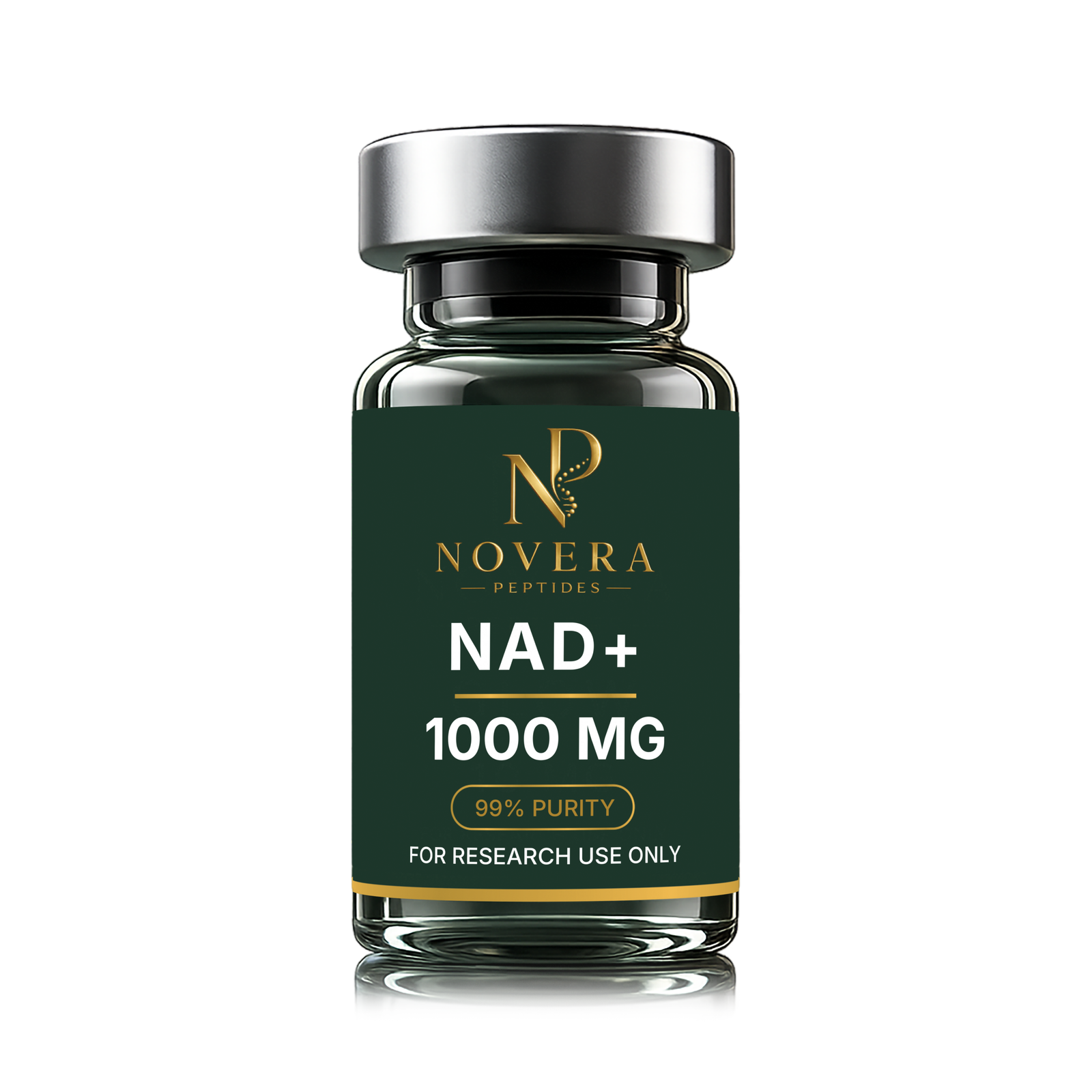

NAD+

Categories:

Nicotinamide Adenine Dinucleotide (NAD+) is a naturally occurring research compound extensively investigated for its role in cellular energy metabolism, mitochondrial function, intracellular signaling, and healthy aging biology. Current laboratory studies continue to explore its involvement in metabolic regulation, cellular maintenance, and mitochondrial communication under controlled research conditions. For laboratory research use only.

$95.00

Out of stock

Out of stock

vERFIED
PURITY

Secure
Payment

Third-party
Tested

Research Use Disclaimer

Research Use Only: All products offered are intended strictly for laboratory research purposes. Products are not for human consumption and are not intended for diagnostic, therapeutic, or medical use. By purchasing from our website, customers confirm they are qualified researchers or laboratories and understand the intended research-use designation.

NAD+ 1000 mg

Nicotinamide Adenine Dinucleotide (NAD+) is a naturally occurring coenzyme extensively studied for its involvement in cellular energy metabolism, mitochondrial function, intracellular signaling pathways, and biological communication systems. Laboratory investigations continue to examine its role in metabolic regulation, cellular adaptation, and healthy aging research under controlled experimental conditions.

Research Highlights

  • Cellular energy metabolism research
  • Mitochondrial function studies
  • Sirtuin signaling investigations
  • Metabolic regulation research
  • Cellular repair mechanisms
  • Healthy aging biology

Introduction

Nicotinamide Adenine Dinucleotide (NAD+) is a naturally occurring coenzyme found in virtually every living cell and is essential to numerous biochemical processes. Because of its central role in cellular metabolism and mitochondrial biology, NAD+ has become one of the most extensively researched molecules in modern biological science.

Current laboratory investigations continue exploring how NAD+ participates in energy production, intracellular communication, cellular maintenance, and metabolic regulation across diverse experimental research models.

Research Overview

NAD+ has been extensively evaluated in laboratory studies involving mitochondrial biology, cellular metabolism, oxidative stress pathways, DNA maintenance, and age-related biological processes. Researchers continue investigating its interaction with multiple signaling pathways responsible for maintaining normal cellular function.

These investigations continue expanding scientific understanding of cellular metabolism and mitochondrial communication under controlled laboratory conditions.

Mitochondrial Function Research

Scientific investigations have examined the relationship between NAD+ and mitochondrial activity involved in cellular energy production and metabolic efficiency. Researchers continue evaluating how mitochondrial communication contributes to normal biological function and adaptive cellular responses.

This remains one of the primary areas of scientific interest surrounding NAD+.

Cellular Energy Research

NAD+ continues to be investigated for its role in cellular energy metabolism, ATP production, nutrient utilization, and intracellular communication. Laboratory studies seek to better understand how cellular energy pathways coordinate metabolic regulation across multiple biological systems.

These investigations contribute to a broader understanding of metabolic physiology and energy homeostasis.

Healthy Aging Research

Researchers continue exploring NAD+ within experimental models involving healthy aging biology, cellular maintenance, DNA repair pathways, and sirtuin-related signaling mechanisms. Ongoing laboratory investigations examine how these biological systems interact to support normal cellular function throughout the aging process.

This area remains one of the fastest-growing fields of NAD+ research.

Current Areas of Scientific Interest

  • Cellular energy metabolism
  • Mitochondrial function
  • Sirtuin signaling pathways
  • DNA maintenance research
  • Cellular repair mechanisms
  • Healthy aging biology
  • Oxidative stress research
  • Metabolic regulation
  • Intracellular communication
  • Laboratory physiology models

Research Considerations

Scientific findings involving NAD+ should always be interpreted within the context of experimental methodology, study design, laboratory conditions, and model limitations. Ongoing research continues expanding scientific understanding of mitochondrial biology, cellular metabolism, and healthy aging mechanisms.

As with all investigational research materials, conclusions should be based upon peer-reviewed scientific evidence generated under controlled laboratory conditions.

Laboratory Research Notice

This product is supplied exclusively for laboratory research, analytical testing, and scientific investigation. It is intended only for qualified research professionals operating within appropriate laboratory environments.

This product is not intended for human consumption, veterinary use, diagnosis, treatment, prevention, or cure of any disease.

For laboratory research use only. Not for human or animal consumption.

Lorem ipsum dolor sit amet, consectetur adipiscing elit. Ut elit tellus, luctus nec ullamcorper mattis, pulvinar dapibus leo.

Lab Report
Date Added :
07/08/2026

NAD+ 1000 mg

Nicotinamide Adenine Dinucleotide (NAD+) is a naturally occurring coenzyme extensively studied for its involvement in cellular energy metabolism, mitochondrial function, intracellular signaling pathways, and biological communication systems. Laboratory investigations continue to examine its role in metabolic regulation, cellular adaptation, and healthy aging research under controlled experimental conditions.

Research Highlights

  • Cellular energy metabolism research
  • Mitochondrial function studies
  • Sirtuin signaling investigations
  • Metabolic regulation research
  • Cellular repair mechanisms
  • Healthy aging biology

Introduction

Nicotinamide Adenine Dinucleotide (NAD+) is a naturally occurring coenzyme found in virtually every living cell and is essential to numerous biochemical processes. Because of its central role in cellular metabolism and mitochondrial biology, NAD+ has become one of the most extensively researched molecules in modern biological science.

Current laboratory investigations continue exploring how NAD+ participates in energy production, intracellular communication, cellular maintenance, and metabolic regulation across diverse experimental research models.

Research Overview

NAD+ has been extensively evaluated in laboratory studies involving mitochondrial biology, cellular metabolism, oxidative stress pathways, DNA maintenance, and age-related biological processes. Researchers continue investigating its interaction with multiple signaling pathways responsible for maintaining normal cellular function.

These investigations continue expanding scientific understanding of cellular metabolism and mitochondrial communication under controlled laboratory conditions.

Mitochondrial Function Research

Scientific investigations have examined the relationship between NAD+ and mitochondrial activity involved in cellular energy production and metabolic efficiency. Researchers continue evaluating how mitochondrial communication contributes to normal biological function and adaptive cellular responses.

This remains one of the primary areas of scientific interest surrounding NAD+.

Cellular Energy Research

NAD+ continues to be investigated for its role in cellular energy metabolism, ATP production, nutrient utilization, and intracellular communication. Laboratory studies seek to better understand how cellular energy pathways coordinate metabolic regulation across multiple biological systems.

These investigations contribute to a broader understanding of metabolic physiology and energy homeostasis.

Healthy Aging Research

Researchers continue exploring NAD+ within experimental models involving healthy aging biology, cellular maintenance, DNA repair pathways, and sirtuin-related signaling mechanisms. Ongoing laboratory investigations examine how these biological systems interact to support normal cellular function throughout the aging process.

This area remains one of the fastest-growing fields of NAD+ research.

Current Areas of Scientific Interest

  • Cellular energy metabolism
  • Mitochondrial function
  • Sirtuin signaling pathways
  • DNA maintenance research
  • Cellular repair mechanisms
  • Healthy aging biology
  • Oxidative stress research
  • Metabolic regulation
  • Intracellular communication
  • Laboratory physiology models

Research Considerations

Scientific findings involving NAD+ should always be interpreted within the context of experimental methodology, study design, laboratory conditions, and model limitations. Ongoing research continues expanding scientific understanding of mitochondrial biology, cellular metabolism, and healthy aging mechanisms.

As with all investigational research materials, conclusions should be based upon peer-reviewed scientific evidence generated under controlled laboratory conditions.

Laboratory Research Notice

This product is supplied exclusively for laboratory research, analytical testing, and scientific investigation. It is intended only for qualified research professionals operating within appropriate laboratory environments.

This product is not intended for human consumption, veterinary use, diagnosis, treatment, prevention, or cure of any disease.

For laboratory research use only. Not for human or animal consumption.

Sources & References

SCIENCE

NAD+ Repletion Improves Mitochondrial and Stem Cell Function and Enhances Life Span in Mice

2016
Zhang H, et al.

View Source ↗

CELL METABOLISM

NAD+ Metabolism as a Target for Metabolic Health and Ageing

2015
Yoshino J, Baur JA, Imai SI

View Source ↗

NATURE REVIEWS MOLECULAR CELL BIOLOGY

The Biology of NAD+ and Its Importance in Health and Disease

2018
Covarrubias AJ, Perrone R, Grozio A, Verdin E

View Source ↗

CELL

NAD+ in Aging, Metabolism, and Neurodegeneration

2017
Verdin E

View Source ↗

SCIENCE

Declining NAD+ Induces a Pseudohypoxic State Disrupting Nuclear-Mitochondrial Communication During Aging

2013
Gomes AP, et al.

View Source ↗

CELL METABOLISM

NAD+ Precursors Reverse Age-Associated Physiological Decline in Mice

2016
Mills KF, et al.

View Source ↗

NATURE COMMUNICATIONS

NAD+ Supplementation Normalizes Key Alzheimer’s Features and DNA Damage Responses in a Mouse Model

2018
Hou Y, et al.
View Source ↗

Reviews

There are no reviews yet.

Be the first to review “NAD+”

Your email address will not be published. Required fields are marked *

Related Peptides

Age Verification!

*By continuing, you confirm eligibility and legal compliance.