

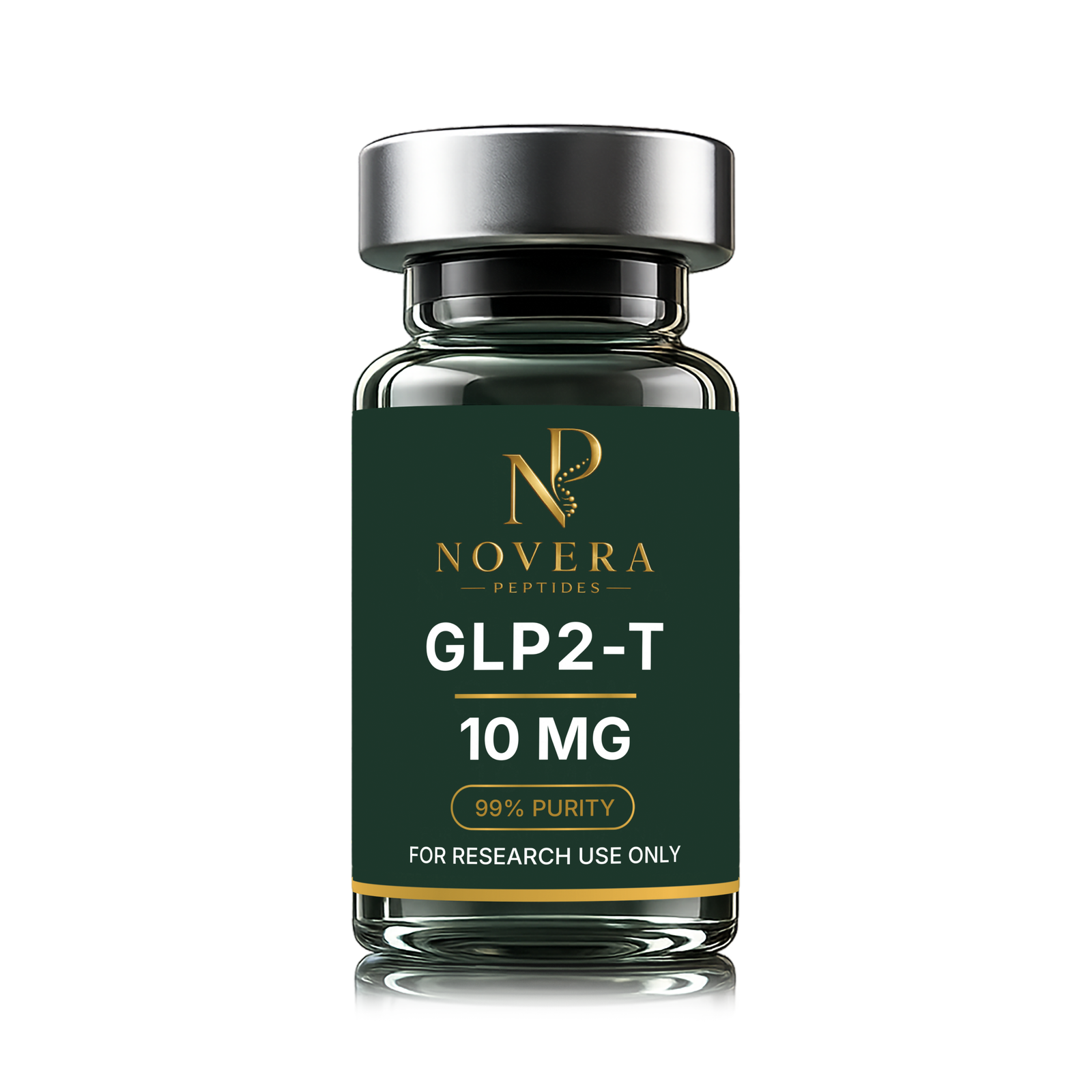

GLP2-T 10 mg
Research Highlights
- Gastrointestinal physiology research
- Intestinal barrier and epithelial biology
- Nutrient absorption pathways
- Cellular communication and signaling
- Metabolic physiology investigations
- Experimental gastrointestinal research models
Introduction
The gastrointestinal system depends upon highly coordinated cellular signaling pathways that regulate nutrient absorption, tissue maintenance, epithelial renewal, and communication between multiple biological systems. GLP2-T has become an area of growing scientific interest because of its relationship with these complex physiological processes.
Current scientific literature continues to investigate GLP-2 signaling within laboratory models involving intestinal physiology, gastrointestinal adaptation, epithelial biology, and molecular communication under controlled research conditions.
Research Overview
GLP2-T has been evaluated in laboratory investigations examining peptide-mediated signaling pathways associated with gastrointestinal physiology and intestinal biology. Researchers continue to explore how GLP-2 signaling contributes to epithelial maintenance, nutrient utilization, cellular communication, and normal physiological regulation.
These investigations continue to improve scientific understanding of gastrointestinal biology and the coordination of multiple signaling pathways involved in digestive physiology.
Gastrointestinal Physiology Research
Scientific investigations continue to examine the role of GLP-2 signaling in maintaining normal gastrointestinal physiology. Researchers study its interaction with intestinal tissue, epithelial maintenance, digestive adaptation, and communication between multiple biological systems.
These laboratory models contribute to expanding knowledge of gastrointestinal function and peptide-mediated biological regulation.
Intestinal Barrier Research
Current research has explored the relationship between GLP2-T and intestinal epithelial biology. Laboratory investigations evaluate cellular organization, barrier integrity, tissue maintenance, and molecular communication involved in maintaining normal intestinal structure.
This area remains an important focus within modern gastrointestinal research.
Nutrient Absorption Research
Researchers continue investigating how GLP-2 signaling interacts with biological pathways associated with nutrient absorption, digestive physiology, intestinal adaptation, and metabolic regulation. These studies seek to better understand the complex coordination between gastrointestinal function and systemic biological activity.
Ongoing investigations continue to broaden scientific knowledge surrounding nutrient utilization within controlled laboratory environments.
Cellular Signaling Research
Beyond gastrointestinal physiology, GLP2-T has been investigated for its role in intracellular communication, peptide-mediated signaling pathways, and adaptive biological responses. Laboratory studies continue examining how these signaling networks coordinate cellular activity across multiple biological systems.
Understanding these communication pathways remains an important objective in peptide research.
Current Areas of Scientific Interest
- GLP-2 signaling pathways
- Gastrointestinal physiology
- Intestinal epithelial biology
- Nutrient absorption research
- Cellular communication pathways
- Digestive system physiology
- Metabolic regulation
- Molecular signaling networks
- Laboratory gastrointestinal models
- Peptide biology research
Research Considerations
Scientific findings involving GLP2-T should always be interpreted within the context of experimental methodology, study design, and laboratory limitations. While published research continues to expand scientific understanding of GLP-2 biology, additional investigation remains necessary to further characterize its activity across diverse experimental models.
As with all investigational research materials, conclusions should be based upon peer-reviewed evidence generated under controlled laboratory conditions.
Laboratory Research Notice
This product is supplied exclusively for laboratory research, analytical testing, and scientific investigation. It is intended only for qualified research professionals operating within appropriate laboratory environments.
This product is not intended for human consumption, veterinary use, diagnosis, treatment, prevention, or cure of any disease.
For laboratory research use only. Not for human or animal consumption.

Reviews
There are no reviews yet.