

GLP3-Retatrutide

Categories:

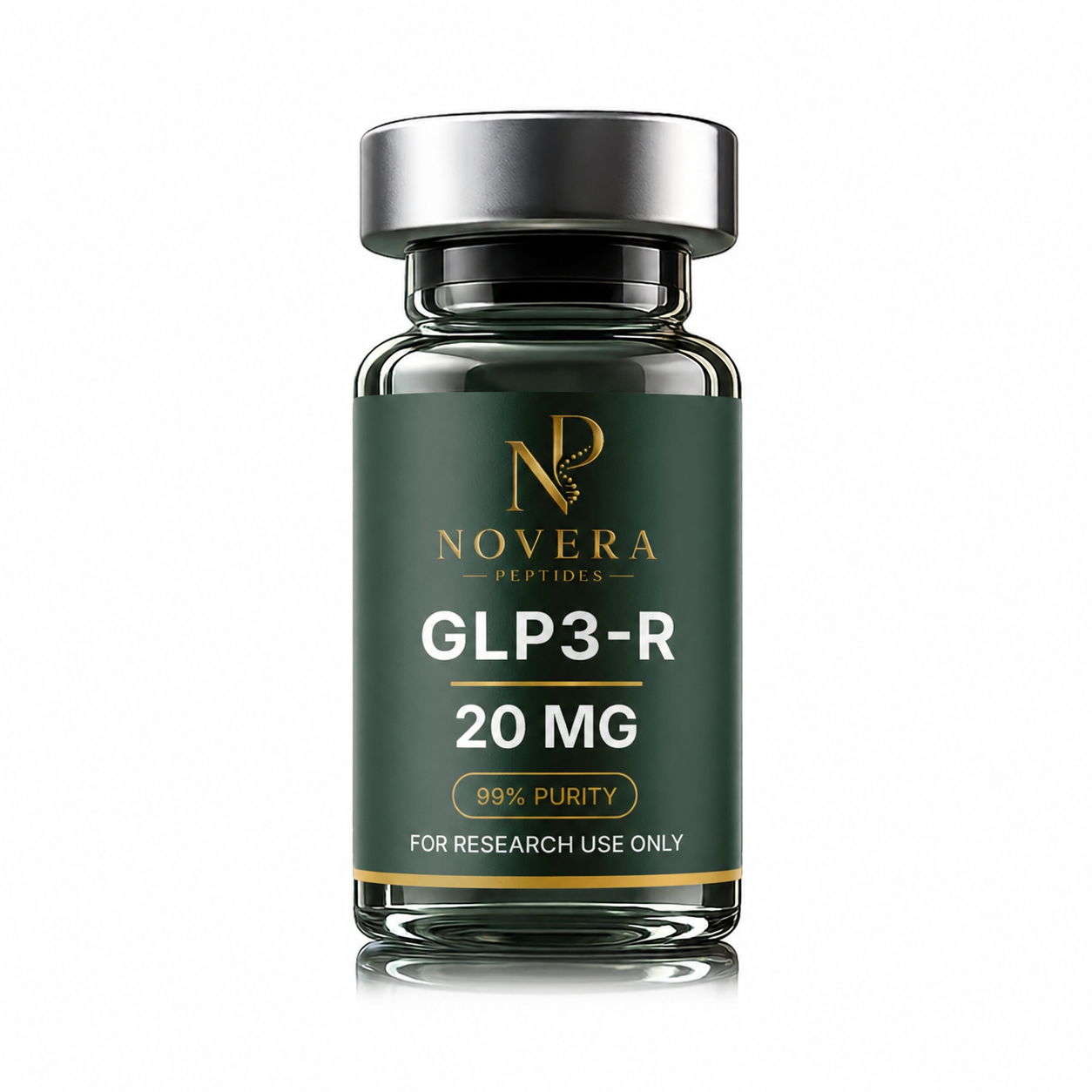
GLP3-R (Retatrutide) is a research compound studied for GLP-1, GIP, and glucagon receptor activity. Third-party HPLC tested with COAs from Novera Research.

Price range: $110.00 through $185.00

SHOW COA
SHOW COA

vERFIED
PURITY

Secure
Payment

Third-party
Tested

Research Use Disclaimer

Research Use Only: All products offered are intended strictly for laboratory research purposes. Products are not for human consumption and are not intended for diagnostic, therapeutic, or medical use. By purchasing from our website, customers confirm they are qualified researchers or laboratories and understand the intended research-use designation.

GLP3-Retatrutide

Retatrutide (GLP3-R) is a next-generation research compound investigated for its interaction with the GLP-1, GIP, and glucagon receptors. Its triple-receptor mechanism has made it a major focus of metabolic research involving energy balance, glucose regulation, and body composition. Novera Research provides third-party HPLC-tested research material with supporting COAs for laboratory research use only.

Research Highlights

  • Triple receptor signaling research (GLP-1, GIP & Glucagon)
  • Metabolic physiology investigations
  • Energy expenditure and nutrient utilization
  • Body composition research
  • Glucose metabolism studies
  • Cardiovascular and metabolic biology models

Introduction

Energy balance and metabolic regulation depend upon highly coordinated communication between multiple endocrine pathways. Retatrutide has become an important focus of scientific investigation because it simultaneously interacts with three biological receptor systems involved in metabolic homeostasis.

Current scientific literature continues to investigate these signaling pathways using laboratory and clinical research models to better understand metabolic adaptation, glucose regulation, energy utilization, and whole-body physiology.

Research Overview

GLP3-R has been extensively evaluated in experimental research involving metabolic signaling, endocrine communication, glucose metabolism, body composition, and physiological energy regulation. Researchers continue exploring how multiple receptor pathways coordinate biological responses across complex metabolic systems.

These investigations continue expanding scientific understanding of multi-receptor peptide biology and its potential role in future metabolic research.

Triple-Receptor Research

Unlike traditional single-pathway compounds, GLP3-R has been investigated for its interaction with GLP-1, GIP, and glucagon receptor pathways simultaneously. Laboratory studies continue evaluating how these signaling systems communicate to regulate metabolic physiology and adaptive biological responses.

This unique multi-pathway activity remains one of the primary reasons Retatrutide continues attracting significant scientific interest.

Metabolic Research

Researchers continue studying GLP3-R in laboratory models involving glucose metabolism, insulin signaling, nutrient utilization, metabolic efficiency, and adaptive physiological regulation. Experimental investigations seek to better understand how coordinated receptor activity influences overall metabolic function.

This area remains one of the fastest-growing fields within peptide research.

Body Composition Research

Scientific investigations have explored the relationship between GLP3-R and laboratory models involving body composition, energy balance, adipose tissue physiology, and metabolic adaptation. Researchers continue evaluating biological mechanisms involved in nutrient partitioning and energy utilization.

These findings continue expanding scientific understanding of whole-body metabolic regulation.

Cardiovascular & Liver Research

Current research has also investigated GLP3-R in laboratory models involving cardiovascular physiology, liver biology, renal biomarkers, and metabolic health. Scientists continue evaluating how these interconnected biological systems respond to coordinated multi-receptor signaling under controlled research conditions.

Ongoing investigations continue broadening scientific interest beyond metabolic physiology alone.

Current Areas of Scientific Interest

  • GLP-1 receptor signaling
  • GIP receptor biology
  • Glucagon receptor pathways
  • Energy expenditure research
  • Metabolic physiology
  • Body composition investigations
  • Glucose metabolism
  • Cardiovascular physiology
  • Liver biology research
  • Multi-pathway peptide signaling

Research Considerations

Scientific findings involving GLP3-R should always be interpreted within the context of study methodology, experimental design, participant selection, and laboratory limitations. Although current literature continues expanding scientific understanding of Retatrutide biology, ongoing research remains necessary to further characterize its activity across diverse experimental models.

As with all investigational research materials, conclusions should be based upon peer-reviewed evidence generated under controlled laboratory conditions.

Laboratory Research Notice

This product is supplied exclusively for laboratory research, analytical testing, and scientific investigation. It is intended only for qualified research professionals operating within appropriate laboratory environments.

This product is not intended for human consumption, veterinary use, diagnosis, treatment, prevention, or cure of any disease.

For laboratory research use only. Not for human or animal consumption.

Lorem ipsum dolor sit amet, consectetur adipiscing elit. Ut elit tellus, luctus nec ullamcorper mattis, pulvinar dapibus leo.

Lab Report
Date Added :
07/17/2026

GLP3-Retatrutide

Retatrutide (GLP3-R) is a next-generation research compound investigated for its interaction with the GLP-1, GIP, and glucagon receptors. Its triple-receptor mechanism has made it a major focus of metabolic research involving energy balance, glucose regulation, and body composition. Novera Research provides third-party HPLC-tested research material with supporting COAs for laboratory research use only.

Research Highlights

  • Triple receptor signaling research (GLP-1, GIP & Glucagon)
  • Metabolic physiology investigations
  • Energy expenditure and nutrient utilization
  • Body composition research
  • Glucose metabolism studies
  • Cardiovascular and metabolic biology models

Introduction

Energy balance and metabolic regulation depend upon highly coordinated communication between multiple endocrine pathways. Retatrutide has become an important focus of scientific investigation because it simultaneously interacts with three biological receptor systems involved in metabolic homeostasis.

Current scientific literature continues to investigate these signaling pathways using laboratory and clinical research models to better understand metabolic adaptation, glucose regulation, energy utilization, and whole-body physiology.

Research Overview

GLP3-R has been extensively evaluated in experimental research involving metabolic signaling, endocrine communication, glucose metabolism, body composition, and physiological energy regulation. Researchers continue exploring how multiple receptor pathways coordinate biological responses across complex metabolic systems.

These investigations continue expanding scientific understanding of multi-receptor peptide biology and its potential role in future metabolic research.

Triple-Receptor Research

Unlike traditional single-pathway compounds, GLP3-R has been investigated for its interaction with GLP-1, GIP, and glucagon receptor pathways simultaneously. Laboratory studies continue evaluating how these signaling systems communicate to regulate metabolic physiology and adaptive biological responses.

This unique multi-pathway activity remains one of the primary reasons Retatrutide continues attracting significant scientific interest.

Metabolic Research

Researchers continue studying GLP3-R in laboratory models involving glucose metabolism, insulin signaling, nutrient utilization, metabolic efficiency, and adaptive physiological regulation. Experimental investigations seek to better understand how coordinated receptor activity influences overall metabolic function.

This area remains one of the fastest-growing fields within peptide research.

Body Composition Research

Scientific investigations have explored the relationship between GLP3-R and laboratory models involving body composition, energy balance, adipose tissue physiology, and metabolic adaptation. Researchers continue evaluating biological mechanisms involved in nutrient partitioning and energy utilization.

These findings continue expanding scientific understanding of whole-body metabolic regulation.

Cardiovascular & Liver Research

Current research has also investigated GLP3-R in laboratory models involving cardiovascular physiology, liver biology, renal biomarkers, and metabolic health. Scientists continue evaluating how these interconnected biological systems respond to coordinated multi-receptor signaling under controlled research conditions.

Ongoing investigations continue broadening scientific interest beyond metabolic physiology alone.

Current Areas of Scientific Interest

  • GLP-1 receptor signaling
  • GIP receptor biology
  • Glucagon receptor pathways
  • Energy expenditure research
  • Metabolic physiology
  • Body composition investigations
  • Glucose metabolism
  • Cardiovascular physiology
  • Liver biology research
  • Multi-pathway peptide signaling

Research Considerations

Scientific findings involving GLP3-R should always be interpreted within the context of study methodology, experimental design, participant selection, and laboratory limitations. Although current literature continues expanding scientific understanding of Retatrutide biology, ongoing research remains necessary to further characterize its activity across diverse experimental models.

As with all investigational research materials, conclusions should be based upon peer-reviewed evidence generated under controlled laboratory conditions.

Laboratory Research Notice

This product is supplied exclusively for laboratory research, analytical testing, and scientific investigation. It is intended only for qualified research professionals operating within appropriate laboratory environments.

This product is not intended for human consumption, veterinary use, diagnosis, treatment, prevention, or cure of any disease.

For laboratory research use only. Not for human or animal consumption.

Dosage

10MG, 20MG

Sources & References

NEW ENGLAND JOURNAL OF MEDICINE

Retatrutide for Obesity — A Phase 2 Trial

2023 • DOI: 10.1056/NEJMoa2301972
Jastreboff AM, et al.

View Source ↗

THE LANCET

Retatrutide in Type 2 Diabetes

2024
Rosenstock J, et al.


View Source ↗

NATURE MEDICINE

Retatrutide and Metabolic Dysfunction-Associated Steatotic Liver Disease

2024
Sanyal AJ, et al.

View Source ↗

UCHealth

Retatrutide, the newest weight-loss drug, helped people lose 30% of body weight, on par with weight-loss surgery

2026
Katie Kerwin McCrimmon, et al.

View Source ↗

PUBMED CENTRAL

Retatrutide—A Game Changer in Obesity Pharmacotherapy

2025
Vasiliki Katsi, et al.

View Source ↗

THE LANCET

Efficacy and Safety of Retatrutide in Type 2 Diabetes (TRANSCEND-T2D-1)

2026
Bajaj HS, et al.

View Source ↗

CLINICALTRIALS.GOV

The Effect of Retatrutide Once Weekly on Cardiovascular Outcomes and Kidney Outcomes in Adults Living With Obesity (TRIUMPH-Outcomes)

2026
Eli Lilly and Company, et al.

View Source ↗

Reviews

There are no reviews yet.

Be the first to review “GLP3-Retatrutide”

Your email address will not be published. Required fields are marked *

Age Verification!

*By continuing, you confirm eligibility and legal compliance.